Investment
Leeds UK Property Market: Prices Outrunning Rents
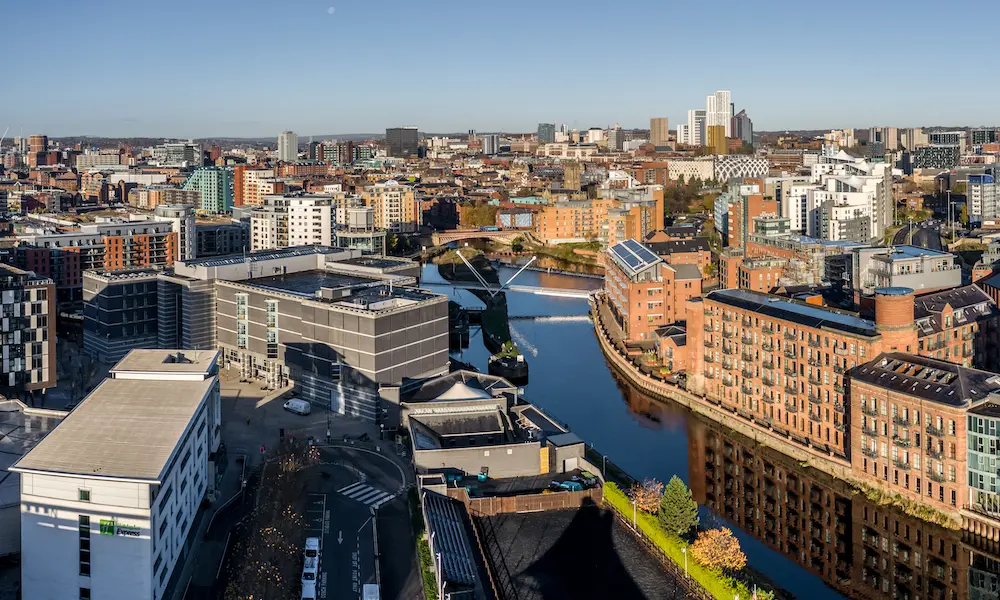
Anyone who has been tracking Leeds through 2026 will have noticed something that does not fit the standard regional-city narrative.
Capital values are climbing quickly, rental growth has slowed, and that is close to the reverse of what has played out across most of the North over the past three years; it deserves an explanation rather than a paragraph of boilerplate about a thriving northern powerhouse.
Part of that explanation is sitting on a drawing board at the West Yorkshire Combined Authority.
Leeds is routinely described as the largest city in western Europe without a mass transit system, and it is now several billion pounds closer to changing that.
This article looks at where the numbers actually sit, what the tram programme has and has not committed to, and how both should shape the way an investor reads the city.
Gap Widens: Capital Values vs Rental Income
The gap between capital values and rental income is widening.
Start with the official position. According to the Office for National Statistics and HM Land Registry, the average house price in Leeds reached £249,000 in June 2026, up 5.9% on the £236,000 recorded a year earlier.
Across Yorkshire and the Humber, the equivalent rise was 3.6%. Leeds comfortably beat its own region on capital growth.
Rents went the other way. The average monthly private rent in Leeds was £1,140 in July 2026, up 3.6% from £1,100 a year earlier.
Regional rents rose 5.0% over the same period. So Leeds outperformed Yorkshire and the Humber on prices while underperforming it on rents, and that combination does one thing to a buy-to-let model: it compresses the yield.
The averages also hide a split that matters enormously depending on what you buy. Terraced prices in Leeds rose 6.7% through June 2026.
Flats rose 3.4%, and the longer view is starker still. ONS put the average Leeds flat at £156,000 in February 2024 and £154,000 in June 2026. Apartments, which is to say the stock most hands-off investors actually purchase, have gone nowhere in over two years while the headline city figure has climbed.
That is not an argument against apartments but rather an argument against reading a city-level growth figure as though it applies to your asset class.
Leeds Infrastructure Gap
Leeds has an infrastructure gap that no other major UK city has, despite previous attempts to sort it, which were unsuccessful. The Supertram scheme collapsed, and the New Generation Transport trolleybus was scrapped in 2016, with £173.5m of Department for Transport money redirected into buses and park and ride instead. Local scepticism is earned, not irrational.
The current programme is on firmer ground. In June 2025 the Chancellor allocated £2.1bn of Transport for City Regions funding to West Yorkshire for the 2027 to 2032 period, with the mass transit programme costed at around £2.5bn.
Phase one is two lines: a Leeds Line running from St James’s University Hospital through the city centre to the White Rose Centre via Elland Road, and a Bradford Line connecting the two city centres.
The Combined Authority has committed to spades in the ground by 2028, and the earlier route consultation drew 4,845 responses, with more than three quarters backing the Leeds Line proposal.
Mass Transit Opening late 2030s
Two caveats go alongside that. Following an independent peer review, the Combined Authority pushed the expected opening back from the mid-2030s to the late 2030s, and the final route consultation was delayed with it.
Confirmation that the network will definitely be a tram, rather than another mass transit mode, has also not yet been given. The Strategic Outline Case is due to go to government later in 2026. Anyone building a hold period around the tram should be building it around 2038, not 2033.
Transit Corridor Is A Priority
Why does the corridor matter before the first tram runs?
Transit value tends to be priced in stages rather than on opening day. Route confirmation, planning consent and visible construction each move sentiment, and developers position their pipelines around confirmed corridors well before any service begins.
The practical consequence for Leeds is that the window in which corridor stock is still priced as secondary is finite and probably closing over the next few years, not the next decade.
Leeds Line Route
The Leeds Line route is instructive here because it does not run through thecity’s expensive party. It runs south through Hunslet and past Elland Road towards the White Rose, and it runs east towards St James’s. Those are areas where terraced and apartment stock currently trades well below the £249,000 city average, in a city where terraced prices are already the fastest-growing segment. For example, an investor comparing two similar two-bedroom flats at the same price, one on a confirmed phase-one corridor and one three miles off it, is looking at two genuinely different capital growth propositions over a fifteen-year hold, even though today’s yield on both might be identical.
South Bank shows what delivery does to a district.
The best evidence for how this plays out is already visible. South Bank is expanding the Leeds city centre footprint substantially, and Aire Park, Vastint’s £1.5bn masterplan, anchors it with 1,400 homes and more than a million square feet of mixed-use space around what is now the UK’s largest new city centre park. Parts of it opened in 2025, with full delivery targeted for 2032.
What changed in South Bank was not the promise, which had existed for years. What changed was that tenants could walk through a finished park rather than past hoardings. Sentiment in a regeneration district depends on evidence, and the tram corridor is currently at the hoardings stage.
Weighing Up Purchasing a Leeds Rental Property
What to weigh against an investment property purchase?
Leeds is not a straightforward buy. Rental growth is running below the region, so income assumptions based on 2022 and 2023 patterns need revisiting.
Apartment values have been static for over two years. Supply is concentrated, with a large share of the city’s new residential development clustered in South Bank, which is a competitive pressure on any new-build apartment let in LS10 or LS11.
Add the Renters’ Rights regime, service charges on newer blocks and Leeds City Council’s licensing requirements, and the gap between gross and net is wider than the headline yield suggests.
For a fuller breakdown of the current pipeline and where yields sit across the city, an overview of Leeds property investment is a good place to start before commissioning anything more detailed.
Final Words
Leeds in 2026 is a market where capital growth has decoupled from rental growth.
Official ONS and Land Registry data show prices up 5.9% year on year against rents up 3.6%, with terraced stock driving the gains and apartments flat since early 2024.
Sitting behind that is a genuinely location-specific variable that no other large UK city faces in the same form: a funded, politically backed mass transit programme in the only major western European city still without one, with construction due in 2028 and services now expected in the late 2030s.
That timeline is long; it has slipped once, and the mode is not finally confirmed. But it is the clearest structural reason to think corridor-adjacent Leeds stock is priced on the present rather than the future. Investors who understand the difference between a city average and an asset-class average, and who can hold long enough for the infrastructure to arrive, are the ones best placed to benefit.